Skip to content
QualirexIndustrial
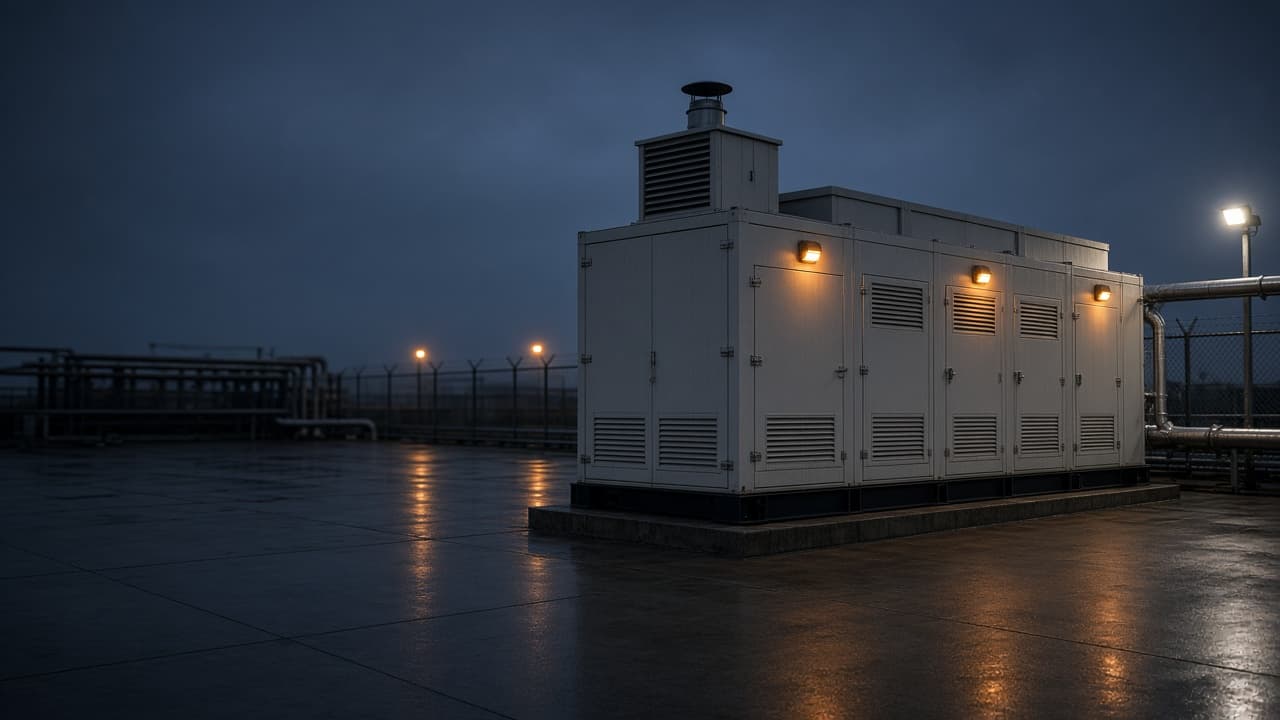
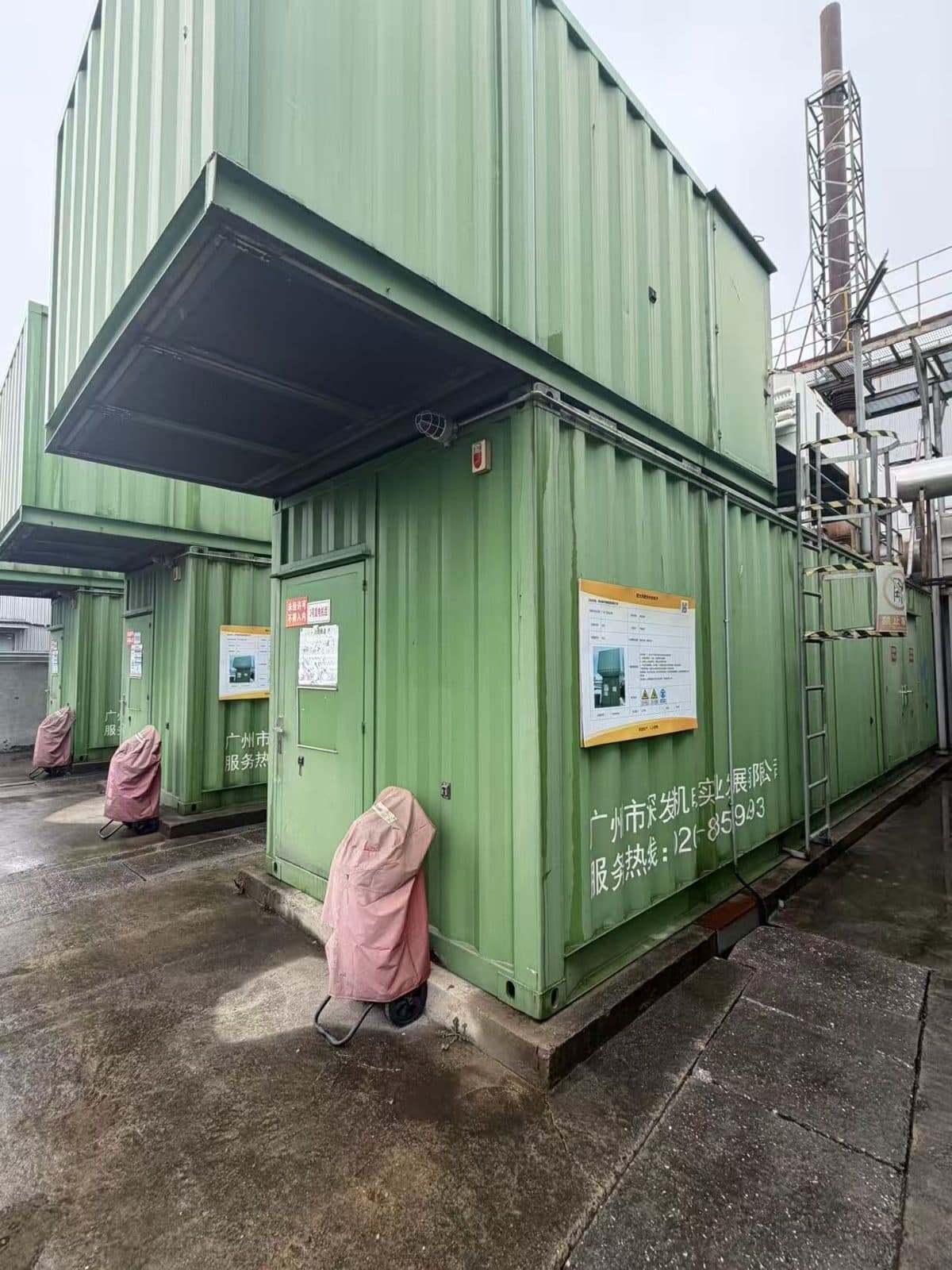
Enclosed gas turbine generator package on a concrete pad in an industrial yard at dusk, lit by amber work lights.

Energy

QR industrial gas turbines, 100 kW to 35 MW.

Generator sets for combined heat and power, associated gas, data centers, standby and mobile duty — plus inspected pre-owned equipment with photos and owner-reported condition.

QR machines

Ratings you can read before you ask.

These are separate machines from different manufacturers. Qualirex supplies them from a 100 kW stationary package through the 35 MW class. Open a model for its ratings, or ask and we will send the full sheet with the quotation.

Outputs offered
100 kW–35 MW
NOxLow-NOx models
≤25 ppm
Overhaul intervalThree large frames
50,000 h
Combined-cycle efficiency2×1, ISO, natural gas
54.9%

Lineup

Choose your output.

Six gas turbine generator sets, from 100 kW to 34.5 MW. Each is built by its own manufacturer and supplied by Qualirex. Select a rating to open its datasheet.

Applications

Where a QR set is used.

The same machines, in continuous duty, standby, or on a truck. Heat recovery figures below are the ratings for the named model.

  • Combined heat and power

    Electricity plus steam, hot water or absorption chilling from one gas turbine.

    The turbine generates power and recovers exhaust heat as steam, hot water, or heat to drive an absorption chiller. A QR-GT1800 delivers 1,800 kW together with about 6 t/h of saturated steam at 180 °C, or the equivalent in hot water. The QR-GT100 recovers hot water at 60 °C and 228 L/min. Heat serves process loads in manufacturing, refining and chemical plants, and building heating or cooling.

  • Oilfield associated gas

    Fire associated gas on the lease instead of moving a modest volume to a distant pipeline.

    Where the gas volume is limited and a transmission pipeline is far away, gathering, storage and transport cost more than the gas is worth. A small industrial gas turbine burns that associated gas on site and supplies power to the production equipment.

  • Data centers

    Prime or standby power for sites that need stable output, including AI loads.

    Remote and smaller data centers can run a QR turbine continuously, or keep it as standby that starts when needed. AI halls add large loads and a high bar for reliability. Gas-turbine output holds voltage and frequency, including against harmonic and non-linear loads, without requiring a large grid connection at the site.

  • Critical standby

    Fixed or mobile backup for facilities that cannot go dark.

    Standby sets cover government sites, hospitals, 4G and 5G base stations, television and radio broadcast, airports and EV charging — installed in place, or brought in as a mobile unit.

  • Mobile power

    A truck-mounted generating set for events, disaster relief and emergency response.

    The vehicle-mounted QR-GT1800 is a self-contained generating set, 12 × 2.55 × 3.9 m and at most 32 t. It covers temporary duty where a fixed installation is not available: events, disaster relief and emergency response.

  • High altitude

    Compressor-fed combustion keeps output stable in thin air.

    At high elevation the air is thin. Naturally aspirated engines draw that air directly, so combustion is less stable and efficiency falls. A gas turbine feeds its combustor from a compressor, which offsets the low atmospheric pressure and holds output more steadily.

  • Energy-storage hybrids

    Batteries and flywheels cover the transient; the turbine carries the sustained load.

    Batteries, supercapacitors and flywheels start quickly, then discharge just as quickly and cannot be refilled in a short window. Past a certain power rating their capital cost rises sharply. Paired with a gas turbine, that storage covers the fast transient while the turbine supplies sustained energy.

Why a turbine

Against a reciprocating engine.

How an industrial gas turbine compares with a reciprocating gas or diesel engine.

QR industrial gas turbine vs reciprocating engine
ParameterQR industrial gas turbineReciprocating gas/diesel engine
Start reliability99.96%95%
Power qualityStable voltage and frequency; strong tolerance of harmonics and non-linear loadsWeaker voltage and frequency stability; weaker tolerance of harmonics and non-linear loads
No-load operationSustained no-load and low-load operationBrief no-load operation only
Cold start−40 °C to 40 °C without pre-heatPre-heat required below −10 °C
CoolingAir-cooled; no water systemWater-cooled, with water treatment
Lube oil consumptionNegligibleSignificant
NOx≤60 ppm (≤25 ppm on low-NOx models)≥300 ppm
Vibration10–15 µm50–60 µm
Routine maintenanceQuarterly 15-minute run; oil test every 8,000 h; oil change every 16,000 hOil change every 1,000 h; filters, spark plugs and liners

Typical comparison of an industrial gas turbine with a reciprocating gas or diesel engine.

Industrial turbine vs aero-derivative

  • QR industrial gas turbines use industrial-grade blades. The published overhaul interval for QR-GT25000, QR-GT30000 and QR-GT35000 is 50,000 hours.
  • Aero-derivative turbines are built to aviation practice and have much shorter overhaul cycles — around 1,500 hours.

Support

Parts, training and your brand.

With the turbine we can supply the parts and the control system, train operators, and stay on after commissioning.

  • Spare parts and control systems

    Spare parts for the QR machines we supply, including control-system hardware.

  • Operator training

    Training for the crews who start, load and shut down the set.

  • After-sales support

    Support after handover from the team that quotes the equipment.

  • OEM and private label

    On request, packages can ship in your branding, with your logo.

Tell us the load, the fuel and the site.

Share the duty — prime, standby, heat recovery or mobile — and we reply with a configuration and a quotation.